

Categories
New Mexico Real Estate, New Mexico Real Estate – Buying & SellingPublished May 11, 2026
New Mexico Population Growth and What It Means for Real Estate Prices Through 2030

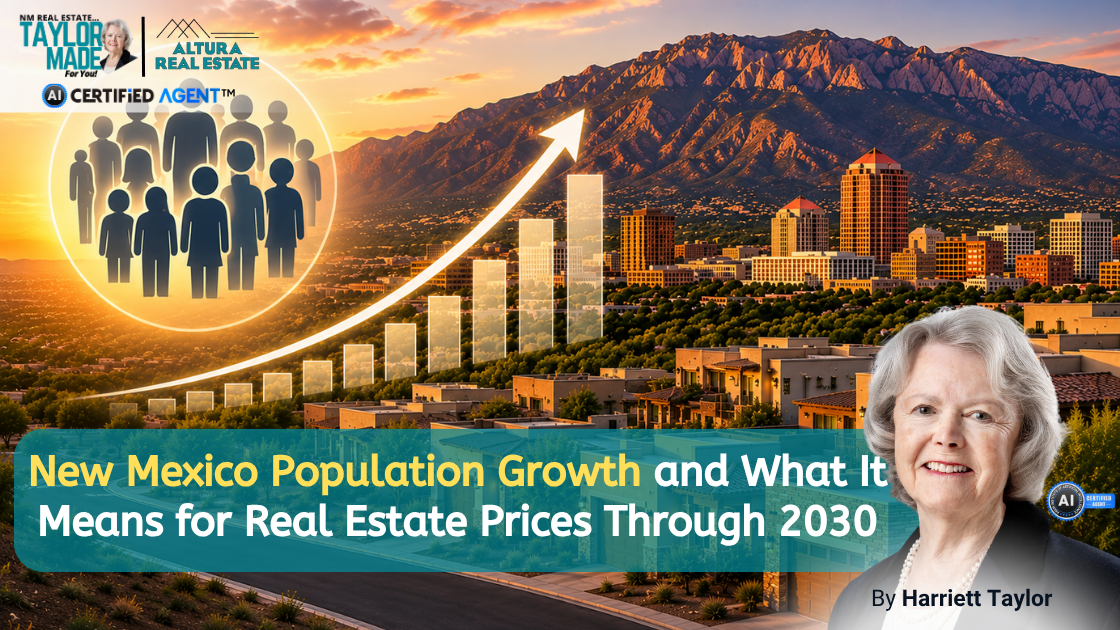
New Mexico Is No Longer a Kept Secret — And Your Real Estate Window Is Closing

Something big is happening in New Mexico, and most of the country hasn't caught up yet. The state that outsiders once dismissed as flyover country is now one of the fastest-growing markets in the Southwest — driven by remote workers, retirees fleeing high-cost states, federal investment, and a tech sector quietly taking root in the high desert.
Between 2020 and 2026, New Mexico added more than 165,000 new residents. By 2030, analysts project the state will cross the 2.3 million threshold — a figure that would represent a 15% population increase in a single decade. For real estate buyers, sellers, and investors, that number isn't just a statistic. It's a countdown clock.
This guide breaks down exactly where New Mexico is growing, why it's growing, which communities are feeling it most, and — most importantly — what it means for home prices in Albuquerque, Santa Fe, Los Lunas, Rio Rancho, Rio Communities, Bosque Farms, and the surrounding areas between now and 2030.
|
KEY INSIGHT: New Mexico's affordability advantage is real — but it won't last forever. Buyers who act in 2026 are locking in prices before the next wave of in-migration drives them higher. This is the same story that played out in Boise, Austin, and Scottsdale a decade ago. |
Why Is New Mexico's Population Growing So Fast?
New Mexico's population surge isn't accidental — it's the result of converging forces that are reshaping the state's economic and demographic landscape simultaneously.
1. The Remote Work Revolution
The single biggest driver of New Mexico's in-migration since 2020 has been the normalization of remote work. With a median home price roughly 40% below California and 25% below Colorado, New Mexico became an obvious landing spot for remote workers earning coastal salaries while spending at local prices.
• Albuquerque: Attracted thousands of California and Texas remote workers, particularly in tech, creative, and healthcare sectors
• Santa Fe: Saw a surge of high-income remote workers seeking cultural richness and walkable neighborhoods
• Los Lunas & Rio Communities: Appealing to families priced out of Albuquerque proper who want space and quiet within commuting distance
2. Federal Investment & Defense Expansion
New Mexico is one of the most federally dependent economies in the nation — and that's a feature, not a bug. Kirtland Air Force Base, Cannon AFB, Holloman AFB, and White Sands Missile Range collectively employ tens of thousands of military and civilian personnel.
• Sandia National Laboratories: A $3B+ annual economic engine in Albuquerque adding high-skill, high-income jobs annually
• Los Alamos National Laboratory: One of the highest per-capita income zip codes in the country — driving northward housing demand
• New Space Economy: Spaceport America (near Truth or Consequences) and Virgin Galactic's presence attracting aerospace talent statewide
3. Healthcare & Education Sector Growth
The University of New Mexico Health Sciences Center and Presbyterian Healthcare Services are among the state's largest employers. UNM's enrollment — over 25,000 students — creates persistent housing demand in Albuquerque's university district, while graduate and faculty housing continues to push into the South Valley, Mesa del Sol, and beyond.
4. Retiree In-Migration from High-Cost States
New Mexico offers one of the most retiree-friendly tax environments in the nation — including a partial military retirement income exemption and relatively low property taxes. Retirees from California, Arizona, Colorado, and Texas are arriving in numbers not seen in decades.
• Top retiree destinations: Rio Communities, Belen, Bosque Farms, Corrales, and East Mountains communities (Tijeras, Edgewood)
• Appeal: Affordable homes, mild dry climate, outdoor recreation, arts culture (Santa Fe, Taos), and proximity to major medical centers
5. New Mexico's Cost of Living Advantage
Put simply: New Mexico is still genuinely affordable by Western standards, and that gap is attracting buyers in volume.
|
Metric |
New Mexico |
California |
Colorado |
Arizona |
|
Median Home Price (2026 est.) |
$285,000 |
$780,000 |
$545,000 |
$420,000 |
|
Property Tax Rate (avg) |
0.55% |
0.76% |
0.51% |
0.62% |
|
State Income Tax (top rate) |
5.9% |
13.3% |
4.4% |
2.5% |
|
Cost of Living Index |
88 |
151 |
121 |
108 |
Source: U.S. Census Bureau, NMTC, Zillow Research (2026 estimates). Cost of living index: U.S. average = 100.
Where Is New Mexico Growing Fastest? A City-by-City Breakdown
Population growth isn't uniform across New Mexico — it's concentrated in specific corridors and communities. Here's where buyers and investors should be paying attention:
Albuquerque – The Metro Engine
New Mexico's largest city and economic core, Albuquerque is projected to grow from approximately 564,000 (2020) to nearly 620,000 by 2030. The growth is uneven: the NE Heights, Westside, and Volcano Cliffs areas are absorbing most of the new housing demand.
• Neighborhoods to watch: Mesa del Sol, Volcano Heights, Rio Rancho border zones, Kirtland AFB corridor
• Price trajectory: Median home prices in Albuquerque have risen from $220K (2020) to approximately $290K (2026) — a 32% increase in 6 years
• Schools driving demand: La Cueva, Eldorado, and Rio Grande High School zones consistently attract families moving from out of state
• Lifestyle anchor: Albuquerque International Balloon Fiesta (October), Nob Hill dining district, Old Town, and the Sandia Peak Tramway give ABQ year-round cultural gravity
Rio Rancho – New Mexico's Fastest-Growing City
Rio Rancho, Sandoval County, is the story of New Mexico's growth in microcosm. From a master-planned Intel town in the 1970s to New Mexico's third-largest city with 105,000+ residents, Rio Rancho is on track to hit 125,000 by 2030.
• Why it's growing: Newer housing stock, top-rated schools (Rio Rancho Public Schools), lower crime rates, newer retail and medical infrastructure
• Key developments: Presbyterian Rust Medical Center expansion, Southern Blvd commercial corridor growth, Enchanted Hills master community
• Price trajectory: Median home price rose from $215K (2020) to approximately $295K (2026) — fueled by demand from Albuquerque spillover buyers
• 2030 outlook: With continued employer attraction (Amazon distribution, logistics sector) and school quality, Rio Rancho will continue to be a seller's market through the decade
Los Lunas & Valencia County – The Affordable Growth Corridor
Thirty miles south of Albuquerque along I-25, Valencia County is experiencing some of the highest per-capita growth rates in the state. The Village of Los Lunas — once a quiet agricultural community — is now one of the most active new construction markets in New Mexico.
• Growth driver: Albuquerque spillover + new construction subdivisions offering 3–4 BR homes in the $320K–$420K range
• Infrastructure investment: New Hwy 6 commercial corridor (Walmart, Target, medical clinics, restaurants) and expanding I-25 access
• Schools: Los Lunas School District is growing its campus footprint to keep pace with student population growth
• Price trajectory: Median prices in Valencia County rose from $185K (2020) to approximately $265K (2026) — 43% growth — with more runway ahead
• 2030 projection: Valencia County could reach 100,000 residents by 2030, up from 78,000 in 2020 — a 28% increase in one decade
Rio Communities & Belen – Where Affordability Still Lives
For buyers seeking genuine value in the greater Albuquerque metro, Rio Communities and Belen (the county seat of Valencia County) remain the most affordable entry points. Rio Communities, an unincorporated community along the Rio Grande south of Belen, attracts retirees, remote workers, and first-time buyers who want space without the premium.
• Current median price: Approximately $220K–$240K for a 3BR home — the lowest in the metro area with full utility infrastructure
• Growth indicator: New construction permits in Rio Communities increased by 34% between 2022 and 2025 as affordability pressure from the north intensified
• Community character: Tight-knit, multigenerational, Spanish colonial heritage — annual Belen Harvey House Festival and Rio Grande nature corridor
• 2030 outlook: As Valencia County grows, Rio Communities will see meaningful appreciation — buyers in 2026 are likely to see 20–30% equity growth by 2030
Bosque Farms – Equestrian Enclave Under Pressure
Nestled between Albuquerque's South Valley and Belen, the small community of Bosque Farms offers something increasingly rare in the metro: irrigated land, horse privileges, and genuine rural quiet — within 25 minutes of Albuquerque's core.
• Current median price: ~$310K–$380K depending on acreage — significantly up from $240K in 2020
• Growth dynamic: Limited land supply (acequia-irrigated, largely owner-occupied) and high demand from lifestyle buyers is compressing inventory to historic lows
• 2030 outlook: Bosque Farms will likely see continued price appreciation driven by scarcity — a premium lifestyle product with a finite supply
Santa Fe & Surrounding Communities – The High-End Catalyst
Santa Fe remains New Mexico's prestige market — and its growth is pulling pricing upward in a wide radius. Communities like Eldorado at Santa Fe, Rancho Viejo, and the Turquoise Trail corridor (Tijeras, Madrid, Cerrillos) are benefiting directly from Santa Fe's appeal to high-income remote workers, artists, and retirees.
• Santa Fe median home price: ~$650K–$700K (2026), up from $450K in 2020 — a 50%+ increase in 6 years
• Spillover communities: Eldorado at Santa Fe ($450K–$550K), Rancho Viejo ($380K–$480K) — both seeing strong demand from buyers priced out of the city
• Cultural draw: Santa Fe Opera, Georgia O'Keeffe Museum, International Folk Art Market (July), hundreds of galleries on Canyon Road
• 2030 projection: Santa Fe proper could approach a $900K median — pushing further migration into surrounding communities and northward into Taos County
New Mexico Home Price Projections: 2026 to 2030
Based on current growth rates, in-migration trends, and new construction pipelines, here are estimated median home price trajectories for key New Mexico markets:
|
Market |
2020 Median |
2026 Median (est.) |
2030 Projection |
% Change 2020–2030 |
|
Albuquerque |
$220,000 |
$290,000 |
$340,000–$365,000 |
+55–66% |
|
Rio Rancho |
$215,000 |
$295,000 |
$345,000–$370,000 |
+60–72% |
|
Santa Fe (city) |
$450,000 |
$680,000 |
$880,000–$950,000 |
+96–111% |
|
Los Lunas / Valencia |
$185,000 |
$265,000 |
$310,000–$340,000 |
+68–84% |
|
Rio Communities |
$165,000 |
$235,000 |
$275,000–$300,000 |
+67–82% |
|
Bosque Farms |
$240,000 |
$345,000 |
$395,000–$430,000 |
+65–79% |
|
Eldorado at Santa Fe |
$380,000 |
$530,000 |
$650,000–$700,000 |
+71–84% |
|
Edgewood / E. Mtns |
$200,000 |
$295,000 |
$345,000–$375,000 |
+73–88% |
Note: Projections are estimates based on historical appreciation rates, population growth forecasts, and new construction data. Real estate markets are subject to economic variables. Consult a licensed New Mexico Realtor for current market analysis.
What New Mexico's Population Growth Means for Home Buyers
For First-Time Buyers
The window for buying in the most affordable communities is narrowing but not closed. Rio Communities, Belen, and select Albuquerque neighborhoods still offer sub-$250K entry points — but inventory is tightening and multiple-offer situations are becoming common even at these price points.
• Act on affordability now — 2026 prices are likely the last sub-$250K buying window in Valencia County
• Look at new construction in Los Lunas and Rio Rancho where builders are still offering incentives
• Explore first-time buyer programs: New Mexico Mortgage Finance Authority (MFA) offers down payment assistance up to $10,000 statewide
For Move-Up Buyers
If you're currently in a starter home in Albuquerque, Rio Rancho, or Valencia County, you're sitting on significant equity gains from the 2020–2026 appreciation cycle. This is an ideal time to leverage that equity for a move-up purchase before the next price tier rises.
• Corrales, the North Valley, and Bosque Farms offer genuine lifestyle upgrades at still-attainable prices
• East Mountain communities (Edgewood, Tijeras) offer land, privacy, and mountain living within 30 minutes of ABQ
• Eldorado at Santa Fe gives Santa Fe culture with more square footage for the dollar
For Real Estate Investors
New Mexico's population growth is creating one of the more compelling small-landlord investment environments in the Southwest. Rising population + limited rental construction = rising rents.
• Albuquerque rental market: Average 2BR apartment rent rose from $900/mo (2020) to approximately $1,250/mo (2026) — a 39% increase
• Short-term rental opportunity: Santa Fe and Taos remain among the top Airbnb markets in the mountain West — occupancy rates above 70% in peak season
• Key investor metros: Rio Rancho (workforce rental), Albuquerque's Near Heights (student rental near UNM), Los Lunas (family rental, new construction)
For Out-of-State Relocators
If you're considering a move to New Mexico from California, Texas, Colorado, or Arizona, the math still works strongly in your favor — but the gap is narrowing. The time to lock in is before 2030 price projections materialize.
• From California: Your $800K home equity can buy you a premium custom home in Corrales or the North Valley — with money left over
• From Texas: Austin and Dallas remote workers are discovering that New Mexico offers similar tech culture with 30% lower housing costs
• From Colorado: Denver and Colorado Springs transplants are common in the East Mountains, Taos, and Santa Fe communities
New Mexico: Why People Are Choosing to Stay
Population growth isn't just about economics — it's also about quality of life. New Mexico offers a uniquely compelling mix that keeps newcomers from leaving:
|
✅ 300+ days of sunshine per year — one of the highest in the nation ✅ World-class outdoor recreation: Sandia Peak Tramway, Taos Ski Valley, Pecos Wilderness, Rio Grande del Norte Monument ✅ Unique culinary identity: New Mexico green chile is a protected regional product — Hatch Chile Festival draws 30,000+ visitors each August ✅ Rich cultural heritage: Native American pueblos, Spanish colonial missions, Route 66 nostalgia ✅ Arts capital of the Southwest: Santa Fe's Canyon Road, Taos Art Museum, Albuquerque's emerging gallery district ✅ Major annual events: Albuquerque International Balloon Fiesta (1M+ visitors, October), Santa Fe Indian Market (August), New Mexico State Fair (September) ✅ No estate taxes — favorable for wealth transfer and retirement planning ✅ Military community integration: Kirtland AFB, Cannon AFB, and White Sands create stable, high-income neighborhoods |
FAQ: New Mexico Population Growth & Real Estate — Answered
Is New Mexico's population growing?
Yes. New Mexico's population grew by approximately 8.3% between 2020 and 2026, adding over 165,000 new residents. The state is projected to reach 2.3 million residents by 2030, driven by remote workers, retirees, federal employment, and economic diversification. Bernalillo County (Albuquerque) and Sandoval County (Rio Rancho) are growing the fastest.
Will home prices go up in New Mexico?
Based on current population growth trends and limited housing supply, yes — home prices in New Mexico are expected to continue rising through 2030. Key markets like Albuquerque, Rio Rancho, and Los Lunas have seen 30–43% appreciation since 2020. Projections suggest an additional 15–25% increase in most markets by 2030, with Santa Fe-area communities potentially seeing higher appreciation.
What is the fastest-growing city in New Mexico?
Rio Rancho is New Mexico's fastest-growing city by population count, projected to grow from 105,000 to approximately 125,000 by 2030. Los Lunas and Valencia County are the fastest-growing by percentage, with an estimated 28% population increase between 2020 and 2030. Albuquerque remains the largest city and continues to grow at roughly 1–1.5% annually.
Is New Mexico a good place to buy real estate in 2026?
Yes — 2026 remains a favorable entry point in New Mexico's real estate market. Prices have risen but remain well below national averages in most communities. The combination of continued population growth, limited new housing supply, strong rental demand, and a low property tax environment creates compelling conditions for both primary home buyers and investors.
Where is the most affordable housing in New Mexico near Albuquerque?
The most affordable communities near Albuquerque in 2026 include Rio Communities (~$230K median), Belen (~$220K median), and select neighborhoods in Albuquerque's South Valley and Mesa del Sol. Los Lunas offers a middle ground with newer construction in the $280K–$350K range and strong school quality.
How is population growth affecting rent prices in New Mexico?
Population growth has pushed rental prices up significantly. Average two-bedroom apartment rents in Albuquerque rose from approximately $900/month in 2020 to $1,250/month in 2026 — a 39% increase. The rental market is tightest in Albuquerque, Rio Rancho, and Santa Fe, where vacancy rates are consistently below 5%.
The Bottom Line: New Mexico's Growth Is Your Opportunity
New Mexico is at a demographic inflection point. The population growth driving up prices in Albuquerque, Rio Rancho, Los Lunas, and beyond is not a temporary spike — it's a structural shift fueled by remote work, federal investment, retiree migration, and a cost-of-living advantage that still stands despite recent appreciation.
The buyers who will look back in 2030 and wish they had acted sooner are the ones making decisions right now. Whether you're a first-time buyer in Rio Communities, a move-up buyer eyeing Corrales, an investor building a portfolio in Albuquerque's rental market, or a California transplant ready to make the move — the 2026 window is still open.
But population growth doesn't pause while you decide.
|
Don't Wait for 2030 — Start Your New Mexico Home Search Today New Mexico's population surge is already pushing prices up in Albuquerque, Los Lunas, Rio Rancho, and beyond. Whether you're buying your first home, investing in a growth market, or relocating to the Land of Enchantment — Harriett Taylor is your local expert. Harriett Taylor | AI Certified Realtor® AI-powered search. Hyper-local expertise. Your New Mexico home is waiting. |
© 2026 Harriett Taylor | Altura Real Estate. All rights reserved. Population projections are estimates based on publicly available data and are not guaranteed. Consult a licensed Realtor for current market analysis.

Harriett Taylor
| Harriett Taylor | Altura Real Estate
or another way